The Friesland eleven-town long distance ice-skating race of 1963 was a shocker.
The Dutch winter that year was particularly harsh. Of the 10,000 who set out for the finishing line, 200 kilometres through the powder snow and extremely low temperatures, only 69 made it to the end. The winner was virtually snow-blind as he stumbled over the finishing line of an event since known as “De Hel van 1963” (“The Hell of ’63,” as highlighted in the title of a 2009 Dutch drama film).
The race takes place once a year in the province of Friesland in north Holland, weather permitting. The ice needs to be at least 15cm deep before the race can take place. Like the Melbourne Cup, it’s a race that stops a nation.
After the hell of 1963, the race did not take place for another 20 years, and the last time the race occurred was in 1997. Why? The ice has not been thick enough. The climate has changed.
For those living in Friesland, they don’t need the scientists to inform them about the change in the weather; the dream deferred of crossing that finishing line on skates that have long been in hibernation is evidence enough that something is afoot. And so, Greta Thunberg, wind farms, rare metals, art vandalism, solar panels, melting continents, coral deforestation, global greening, eco-colonialism, energy poverty – and the list goes on!
The tribunal of empirical evidence
In the 1990s, David Sackett and Gordon Guyatt, among others, founded a movement within medicine designed to harness and generate the best available evidence for the treatment of patients. The proponents of Evidence Based Medicine (EBM) published a series of articles, in the Journal of the American Medical Association, focussing essentially on the nature of evidence as it pertains to various aspects of the medical encounter: treatment, diagnosis, prognosis etc.
Underpinning this movement was the conviction that no matter how extensive physicians’ understanding of a particular condition might be, they did not have a bird’s eye view of creation – and so they needed to submit their understanding and beliefs, no matter how complete and certain they were of their stand, to the tribunal of empirical evidence. They should not simply rely on theory, anecdotal “evidence”, or in the
words of Sackett, “intuitions we could not explain”.
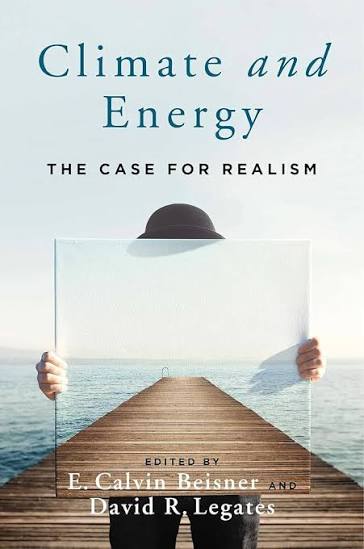
In Climate and Energy: The Case for Realism (2024), editors E. Calvin Beisner and David R. Legates do for climate science what Sackett and others did within medicine; they question.
When Dr Anthony Fauci, who has had an otherwise stellar career prior to Covid, made the observation about his critics during an interview, that “they’re really criticizing science because I represent science”, he unwittingly provided the Internet with a sound bite that would help to define his career.
Medicine advances because it seeks disconfirming evidence as epistemic “holy water”, which then allows hypotheses and predictions to be finessed. Criticism is at the very heart of medicine, and for that matter all science, including climate science. When Carl Sagan explained to Charlie Rose that “science is a way of thinking, a way of sceptically interrogating the universe with a fine understanding of human fallibility,” he was pointing to a necessary character trait in all who would apply the scientific method to the interrogation of nature.
“If we are not able to ask sceptical questions, to interrogate those who tell us something is true, to be sceptical of those in authority,” Sagan said, “then we’re up for grabs for the next charlatan, political or religious, who comes ambling along.”
The influence of values
And so, what to make of climate science, the goal of which is to make accurate predictions about the future? While it is true that EBM and science generally seek the truth of the matter in question, it cannot escape the influence of values. Whether to pursue one question or hypothesis, as opposed to another, requires not more facts but an evaluation. Values insinuate themselves into every decision made in science.
Within the philosophy of EBM, the values and preferences of both clinician and patient play a pivotal role. Weighing and judging requires practical wisdom, and without humility can torture facts to do the scientists’ bidding. Values are inescapable in decision-making but they can also be hijacked by undue influence.
In a chapter in Climate and Energy, Patrick J Michaels expresses concern that climate modelling, as a way of predicting the future, is not entirely transparent. This in itself is reason enough to be sceptical of any prediction, leaving aside the whole question of the influence of global billions of dollars on what the outcome of these predictions might be.
When the models are fine-tuned to an “acceptable range”, and this process of fine-tuning is not made explicit, more than just the value of scientific integrity is a stake. In another chapter in Climate and Energy, Vijay Jayaraj notes the connection between energy poverty and the lack of development in various parts of the world. The very success of the West is due in part to cheap energy, which has provided the ladder to success, which the West now denies to others through what some are calling carbon imperialism. And so facts about the climate and what are done with those facts can have a deleterious effect on people far removed from where those decisions are made, leaving the development of parts of the world hostage to energy poverty. Science servicing the poor?
Chesterton and eugenics – and the promotion of genetic purity
Chesterton was well acquainted with the perils of the “intellectually magnanimous” using the authority of science to alleviate the suffering of the poor. The eugenics movement aimed at the target of improving humanity by promoting the reproduction of “good stock”, while at the same time prohibiting the breeding of those like Carrie Buck, one of the “three generations of imbeciles” that Oliver Wendell Holmes Jr, sitting on the American Supreme Court, allowed to be sterilised. (Another stellar career embodied through intemperate language to just the four words above.)
The facts of the relatively new science of genetics could provide the underpinning for a new utopianism; one of genetic purity. What could possibly go wrong? Chesterton like others at the time could see the dangers of “following the science” when he wrote Eugenics and Other Evils in 1922, well before the stench of incinerators was wafting over Europe.
When eugenics had finally run to seed by mid-century, the utopian animus nevertheless remained. Psychiatrists with ‘ice-picks’ and a little tap of the hammer were “following the science” in another part of the hospital; one of them even making the trek to Stockholm having received the imprimatur from the Nobel Committee.
The lobotomised poor in spirit were perfected at the very cutting edge of medicine; first “do no harm” held in abeyance because so much ‘good’ could be achieved. As C.S. Lewis observed:
“Of all tyrannies, a tyranny sincerely exercised for the good of its victims may be the most oppressive. It would be better to live under robber baron’s cruelty than under omnipotent moral busybodies. The robber baron’s cruelty may sometimes sleep, his cupidity may at some point be satiated; but those who torment us for our own good will torment us without end for they do so with the approval of their conscience.”
He could almost have been talking about some of the scientific enthusiasts of today.
Science has done and will continue to do so much that is good. The fact that we carry around, on our person, a mobile phone with access to untold amounts of information seems almost miraculous and extraordinarily beneficial. Yet as we have seen, science can also underpin the technologies that can do extraordinary harm; just ask Carrie Buck.
For climate science to be a science, Beisner and Legates’ book should be welcome. For the cupidity of those who want to save the world, this book might be a useful tonic.
As for the next 11-town long distance ice-skating race, I’m not unpacking those skates just yet.