A surprising development of our time is a quiet resurgence of the Christian faith, marked by a sudden increase in young adult converts, and an even quieter renewal in Christian, and especially Catholic, literature.
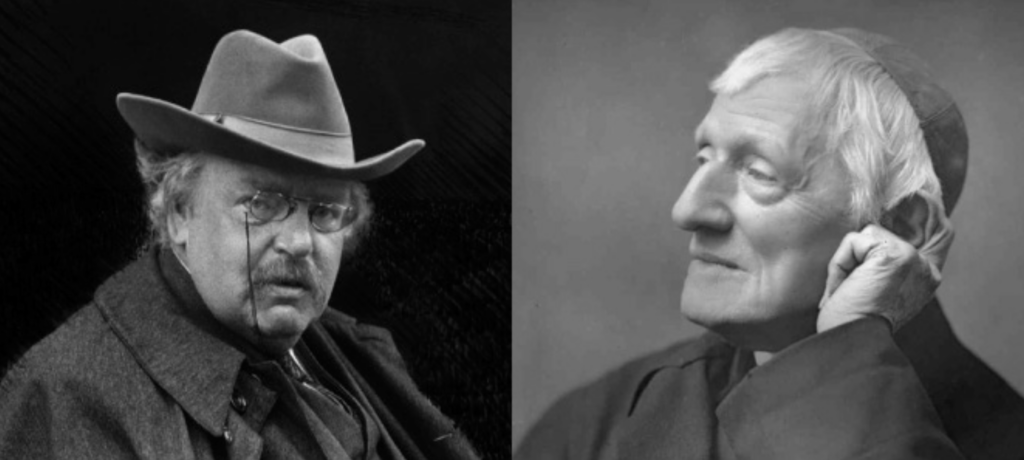
Such a spiritual and literary rebirth last occurred a century ago. While its roots lay in the 19th century – notably in the writings of St John Henry Newman and the poetry of Gerard Manley Hopkins and Francis Thompson – its most popular flowering took place in the first half of the 20th century. It was the time of Chesterton and an array of other writers – of history, biography, religious apologetics, and fiction such as Christopher Dawson and Ronald Knox, Evelyn Waugh and Graham Greene.
Reeling from the slaughter fields of World War I, Western society was driven by an anguished search for answers far beyond the palliatives of political and economic solutions. The horrors of the trenches exposed a spiritual desolation in the culture, which sapped its capacity to provide any uplifting sense of meaning and purpose. The time was ripe for a rediscovery of the vitalizing roots of Western culture in Christianity.
Between 1910 and 1960, more than half a million people in Britain experienced
conversion to the Catholic faith, and those who led the Catholic intellectual and literary revival were themselves mainly converts.
Religious decline reversed
Is a comparable phenomenon beginning to take place in our time?
Dioceses around the Western world, in Australia, Europe and the United States, are noting an unexpected rise in conversions – in contrast to the familiar reports of decline: lower church attendances, fewer Catholic marriages and funerals, vanishing numbers at confession. As the Catholic Archbishop of Sydney, Anthony Fisher, has reported:
“Generation Z, the ‘Zoomers’ or ‘post-millennials,’ is the demographic group bucking this trend, suggesting a renewed interest in Christianity among young people. University campuses, long incubators of ecularization, are now offering new Bible studies, ceremonies, and courses in apologetics.”
Fsspx.news
The phenomenon of conversions among university students is especially surprising, as the typical campus would not be presumed to be friendly to Christian belief. Yet even at historically religious universities like Harvard, there has been a pronounced growth in Christian faith and practice.
Conversion of young men
A marked proportion of the converts is young men. Pondering an explanation, the American writer Noelle Mering points to the sexual revolution for causing “the sustained demonisation and disorientation of men.” She sees “an increasingly fatherless culture [that] made vicious behaviour easy, and recast virtue as repressive, effectively weakening men, hardening women, and stoking the antagonism of the sexes.”
It is hardly surprising, she writes, that young adults, “fleeing the nihilism of hookup culture, yearning for beauty and transcendence, and responding to the disintegration of social and moral structures,” should be rediscovering Christianity (“What young converts are really looking for,” Catholic Herald (London), January 2, 2026).
While it would be tempting to exaggerate the extent of this Christian revival – and it would certainly be premature to identify it as a movement – it is hard to ignore the comment of the English Catholic philosopher and writer, Sebastian Morello: “There’s something bubbling under the surface.” (“England’s Decline – Is the Catholic Faith Set for a Revival?,” National Catholic Register, February 12, 2025)
Impact on the imagination
Joseph Pearce, too, is alive to these “underground stirrings”, and sees a new Catholic revival taking place in the visual arts, music and literature.
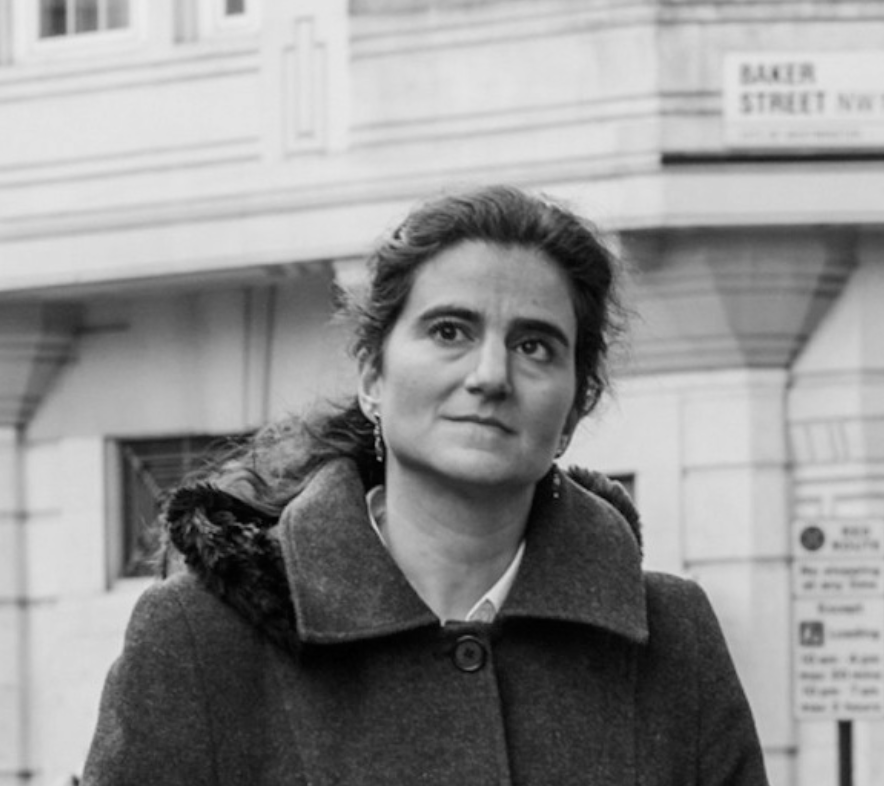
In The Imaginative Conservative (“Notes from Underground,” June 6 and 13, 2024), he highlights a range of literary works by new Catholic authors. On the one hand, murder mysteries, such as those of Fiorella de Maria (particularly her Father Gabriel Mysteries), Barbara Golder, and Lorraine V. Murray, and on the other, works of realist fiction (such as the novels of Glenn Arbery, as well as of
Fiorella de Maria who is skilled in both genres).
An undercurrent of influence continues to flow from established Christian authors, such as Marilynne Robinson, who recently added an impressive study of the Book of Genesis to her acclaimed novels such as Gilead (2004), and the Catholic poet and literary essayist, Dana Gioia, who has long witnessed to the value of faith-inspired literature.

But new authors are also making their mark – for example, the novelists, Joshua Hren, Trevor Cribben Merrill and Katy Carl. They are responding creatively to a culture that is fundamentally at a loss as to what it believes. It searches anxiously for ways of satisfying its spiritual longings, shifting from one substitute to another – a political cause here, a technological opening there, without finding any lasting truth to embrace.
Joshua Hren has founded a publishing house for the new Catholic authors, Wiseblood Books. Its name comes from Flannery O’Connor’s 1952 novel, Wise Blood, thereby honouring the Catholic literary tradition in America reflected in writers such as O’Connor and Walker Percy.
Literature enriching philosophy
Chesterton himself embodied the two approaches of philosophical exposition and literary imagining. In the same year as Orthodoxy, 1908, his classic unfolding of Christian belief, he published the novel, The Man Who Was Thursday, which made real the spiritual impact of evil and suffering and hope. It showed how the imagination in literature can enrich the mind in philosophy, deepening and illuminating the revelation of Christian belief.
Literature has this enriching effect by depicting, in story and character, the Christian experience. It captures the lonely and desperate life a person faces when deprived of this experience. As the French Catholic novelist, Francois Mauriac, described:
“To show the vast abyss that the absence of God has created in our modern world, one has only to picture the man of today in all his misery.”
La Vie et la Mort d’un Poète – Life and Death of a Poet, 1924
As so often, Chesterton revealed a prophetic sense of the cultural environment that would in time confront Christian authors. He saw the rise, “both for good and evil, [of] a highly poetical and largely illogical faith in liberty,” which induced people to run risks “for the sake of spontaneity and diversity.” These were the psychological roots of what would become our culture’s preference for emotional choices, distorted perspectives, and an indulgence in distractions.
Chesterton noted “the spectacle of small or originally small things swollen to enormous size and power,” which would lead to an upending of cultural values (Appreciations and Criticisms of the Works of Charles Dickens, 1911). As he
argued:
“If there is one thing worse than the modern weakening of major morals, it is the modern strengthening of minor morals” (“on Lying in Bed,” Tremendous Trifles, 1909). We have since seen our culture enacting this contradiction – abolishing restrictions on abortion and euthanasia, while imposing bans on smoking.
If the quiet recovery of Christian faith were to gain wider traction, we might nourish the hope of another reversal of values, which could prepare the way for a cultural recovery. Solid convictions might come to challenge transient feelings, and major morals of substance overturn the minor morals of fashion.