
Following his earlier article on usury in The Defendant (Summer 2025), Garrick Small, a property economist and author with wide academic experience, teases out the moral basis of a just price.
He identifies the principles by which to judge, in today’s economic circumstances, whether the price of a product is just and what is the meaning of a living wage. It can be seen that the application of these principles lies behind Chesterton’s championship of widely distributed ownership as the means by which to counter the concentration of economic power.
In the time of St Thomas Aquinas, merchants could find themselves in the confessional for overcharging their customers. Today we have forgotten that charging more than a thing is worth can be mortally sinful.
Unlike other occupations, St Thomas noted that the merchant was constantly working within the occasions of sin where he could easily lose his soul. Today we believe there is no moral obligation involved in abusing market power because “the market will fix it” – and force the proper price to be charged.

It does not take too much reflection to realise that our modern economy bristles with instances where the market enriches some at the expense of others, but our culture has lost the capacity to identify the boundary between healthy commerce and exploitation.
St Thomas’s world was more transparent. As a result, despite his providing an insightful understanding of the morality involved, he did not see the need to outline its practice in too much detail. But he did leave us with a vital clue when he wrote that “no man should sell what is not his.”
Despite the obvious common sense that a person steals when he takes money for what he does not own, the power of that fact is not always obvious in modern economic conditions. Understanding justice in the marketplace revolves about looking closely at what people do own when they engage in trade.
Need – and the pressure of demand
Need is the primary area where ownership is violated. If you have a need, it might cause you to buy something from me, but as the buyer your need remains yours. The price that I charge you should only cover what I own in the thing you want to buy from me.
In modern economics, your need is called “demand”. However, the strength of the buyer’s demand can be allowed to lever the price well beyond what the seller actually owns – and can justifiably charge.
For his part, the seller also owns his need to support his own life, along with the lives of his family who depend on him. Society sets parameters on the amount of work a person can reasonably expect to achieve in a week, a year, or even his whole life. The reward he earns from that work must be sufficient to keep him and his family alive for that period.
In Australia in the 1950s, it was considered reasonable for a man to work for 40 hours a week. This amount of toil was considered sufficient to produce enough income for the man to support himself and his family for that week. It included allowances for savings for holidays and old age, and to cover anticipated risks, such as illness. With production advances that number fell towards 36 hours, but has since started to rise.
If a man charged for his week’s work sufficient to support his family for a month, then he would be charging beyond what his contribution warranted. Conversely, if he was not paid sufficient to support himself, then he would be exploited by the person he sold his labour to.
Possible violations of just commerce
In these examples, three possible violations of just commerce can be found:
- charging a person for their need and not merely what the seller owns in the thing sold,
- setting a price that exceeds what the seller needs in order to satisfy his needs to support the lives of himself and his family, and
- setting wages so low a person cannot reasonably support himself.
A little thought reveals that (1) and (2) largely reduce to a single problem, usually caused by charging for the need of the buyer which the seller has no right to. This is the problem of the just price.
The third case involves the opposite problem. It is known as the problem of just wages. The Catholic Church has long upheld the principle of just wages, often evident in the call for a “living wage”.
Modernity, especially as found within Protestant cultures, has been marked by a rejection of the living wage principle. Modern writers coming from those cultures have substituted “subsistence wage levels” for a living wage. They argue that this is what wages would naturally tend towards if left unhindered.
Subsistence is merely a survival level of income, not a reasonable standard of living. In England, wages fell from “Catholic” levels at the end of the 15th century to subsistence levels by the end of the 16th. The misery often associated with the 18th century industrial revolution had more to do with this transition than the invention of the steam engine or spinning jenny.
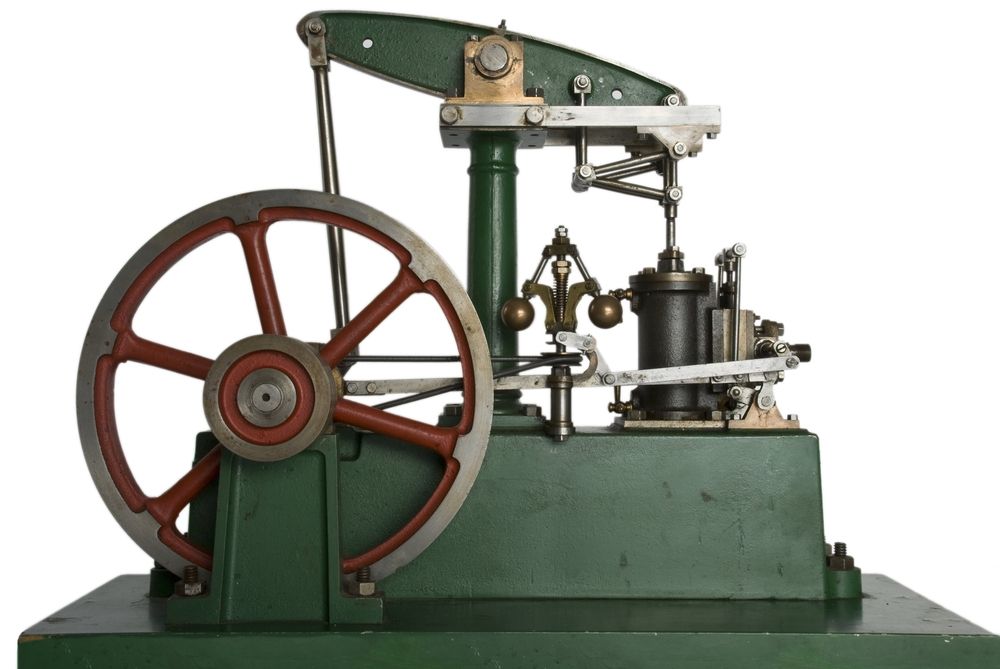
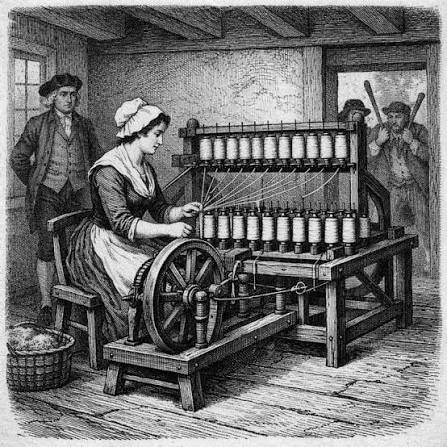
Steam engine Spinning Jenny Abuse of the free market comes from a combination of imbalances of economic power and the inclination of those holding excessive power to use it to take what does not belong to them. Ultimately, they steal the standard of living of the weaker party.
The free market is necessary and healthy, but its abuse by those with economic power undoes its benefits. Economic abuse hinges on the moral fabric of those holding the greater power. Christianity encourages the great commandment to love thy neighbour as thyself. It means encouraging people to freely turn themselves from abusing their power in any context. It was one of the casualties in the Protestant revolt against Catholic morality. It was hidden beneath the war cry of sola fides which Luther invoked to undermine the importance of our good works in attaining salvation.
Ordinary people are seldom faced with the occasions of sin that the merchant must work within, since it is the merchant who usually has the greater power in commercial relationships.
I do not have the economic power of BP or Mobil when I buy fuel. I only have my need to drive to work each day. My need is mine, but it means those companies can charge me for it. Conversely, I need a wage to feed my family, but I have little negotiating power if my employer has a staff of thousands with lines of unemployed who are eager to take my place, even at the expense of a lower living standard.
Karl Marx noted some of this, but his solution was not Godly. He did not advocate for moral self-restraint, but merely a war with those with the upper hand. His solution was essentially a more toxic version of the same problem, but one that carried the additional
evils of making everyone lazy, antisocial and poor.
Hiding behind both approaches is a mean and suspicious opinion of the others in the marketplace, one that sees others as either enemies, or victims to be exploited. This attitude is now widespread, but it is toxic to all human relationships.
Chesterton understood this attitude and devoted his life to inspiring the alternative, ultimately derived from the example we were given from the Cross. He disliked both big business and big government because he saw both as enemies of the common man.
There are ample resources and productivity to provide comfortable circumstances for everyone in society, but only when workers apply themselves and those with economic power freely use it to avoid excessive polarisation of incomes and wealth.
Self-restraint remains the key. It is most reliably found in authentic Christianity. Christ came to show us that it is possible, which is why it does not work without Him.