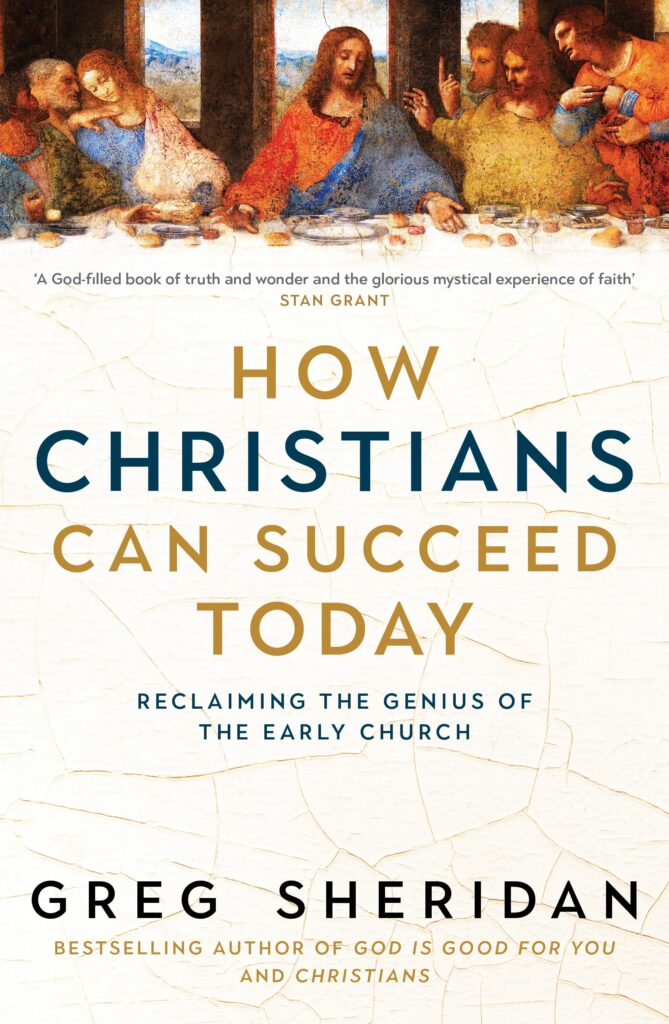
How Christians Can Succeed Today: Reclaiming the Genius of the Early Church by Greg Sheridan (Allen & Unwin). This is a shorter version of the review that appeared in Quadrant, November 2025. It is republished in The Defendant with the kind permission of the journal and its Literary Editor, Professor Barry Spurr.
One of the tests of quality journalism is the ability to integrate insights from different sources and subjects, historical as well as contemporary, and meld them into a coherent narrative.
As the long-time Foreign Editor of The Australian, Greg Sheridan has fulfilled this test admirably in the sphere of political commentary, but most recently he has extended his gaze to religion, in particular present-day Christianity. His latest book, How Christians Can Succeed Today: Reclaiming the Genius of the Early Church, draws on the findings of historical scholarship as well as the testimony of contemporary Christians to present a series of instructive comparisons between the first and twenty-first centuries.
the Early Church
Calling the first half of his book, “The Revolutionary Christians of the Early Church”, he examines the life and profound impact of the first Christians, while in the second half, “Contemporary Early Christians”, he features certain individuals in various fields who are having a significant Christian influence on the culture of our time.
The book serves as the third volume of Sheridan’s trilogy on present-day Christianity. Whereas his first book, God is Good for You: A Defence of Christianity in Troubled Times (2018), focused on the religious foundations and inspirations of Western culture, and his second book, Christians: The Urgent Case for Jesus in our World, presented the person of Jesus Christ as the most radical figure in human life and history, his latest work is a revealing study of the Christian people.
His unifying theme is that Christians separated by twenty centuries actually have much in common. They are both “early Christians”. Despite the obvious differences between the two eras, Sheridan sees the experience of Christians in the first century as providing lessons for Christians in the twenty-first century.
He begins with the first phase of Christianity after Christ, when the future of the new Church hardly seemed promising. Christians were few in number, devoid of financial resources and political power, and subject to savage persecution and the threat of martyrdom. They were timid, hidden away in fear and bewilderment.
Then the risen Christ appeared to the apostles and spent time with them. They were convinced his promises were true and that they would be emboldened by the Holy Spirit to overcome their fears. They would turn into the most adventurous disciples, prepared to live out, and die for, the universal mission of a divine saviour they had initially thought they had lost.
Christianity as a developing religion in the first centuries stands in contrast to its sharp decline in our time, at least in the West, and Sheridan argues that Christians should accept that they are now a minority. But an attitude of acceptance should not induce gloom or a spirit of defeatism. As the book’s title suggests, and the second half illustrates, there are many grounds for hope and creative response.
While Christians face growing antagonism and discrimination, they are not, at this stage, subject to the level and brutality of persecution of the early Christians. The spiritual resilience of the Christian faith is evident in new shoots of growth, which Sheridan discerns in different spheres of modern cultural life – literature, education, politics, media and the movies.
Radical qualities of Christianity
His interviews with various people in these areas highlight the qualities of Christianity that are the most radical and universal, and that challenge the selective morality of modern secularism at its very core. Qualities such as forgiveness rather than retribution, and loving one’s enemies, not just one’s friends.
Tellingly, Sheridan begins with stories of forgiveness, such as in the lives of the Sydney Lebanese couple, Leila and Danny Abdallah, who suffered the poignant loss of three children and a niece when a driver affected by drugs and alcohol drove into them in a suburban street near their home. They forgave the man. Danny visited him in prison where he found him disconsolate. In time the man became a Maronite Christian like Leila and Danny, saying: “I want what you have.” A certain spiritual camaraderie developed, reflecting the power of forgiveness offered – and accepted.
In the unforgiving field of politics, Sheridan turns to Mike Pence to gain insight into whether it is possible to love your enemies. Exploring his subject’s religious beliefs, not his politics or period of service as Vice-President to Donald Trump, he reveals how Pence has sought to live out his Christianity as a religion of love and solidarity in an arena that thrives on conflict and the exploitation of division.
Certainly Pence felt challenged by the Christian injunction to love his enemies. He responded by compiling a prayer journal in which he kept a list of those he should pray for. He found it was “a pathway to forgiveness and grace. To pray for someone who you feel has wronged you.”
Pence found, as Sheridan notes, that the act of prayer “drains the hatred out of your body. . . . Prayer dissolves hatred.” Pence quotes C.S. Lewis: “I don’t know if prayer changes things, but it changes me.”
In a chapter on Christian influence in the media, Sheridan studies the impact of three figures – American Bishop Robert Barron, the founder of Word on Fire, whom he calls “the most successful and important Catholic communicator other than the pope himself”; Mark Varughese, a Malaysian-Australian Pentecostal pastor, whose Kingdomcity churches span fifteen countries and are part of a worldwide Pentecostal Christian movement comprising some 650 million followers; and Jordan Peterson, the Canadian psychologist and author, whose books and media commentaries have attracted a vast audience, particularly of the young, who are searching for higher purpose in a culture that can no longer supply any deep or satisfying answers.
Each of these media evangelists is alive to the spiritual emptiness of present-day culture, now bordering on nihilist despair.
In the first half of How Christians Can Succeed Today, Sheridan devotes separate chapters to St Paul and his transformative power as the greatest teacher of the early Church, and to St Augustine as an outstanding intellectual leader who influenced Christian thought profoundly, and as a result the mind of Western civilisation.
The chapters on Paul and Augustine as supreme communicators pave the way for the later chapters on today’s media evangelists and on the series, The Chosen, and give the entire book an underlying unity.
Sheridan explores how The Chosen, the surprisingly successful TV series about Christ and his disciples, illustrates the narrative power of Christianity when depicted on the screen. It confirms, as he comments, that in neglecting the transcendental mysteries of faith, “the gatekeepers of popular culture are simply missing an enormous part of the human experience.”
The one modern area of communication in which Sheridan believes that Christians should be more active is social media, which would extend their outreach beyond mainstream channels.
Turning to present-day literature and education, Sheridan highlights two modern examples of the imagination and the mind illuminating Christian
truth – the American author, Marilynne Robinson, whom he calls “the
greatest Christian novelist of the 21st century,” and the British historian and
journalistic commentator, Niall Ferguson, who became, in his own words, a “lapsed atheist”, embracing Christianity after he found that the experience of life had dissolved his disbelief.

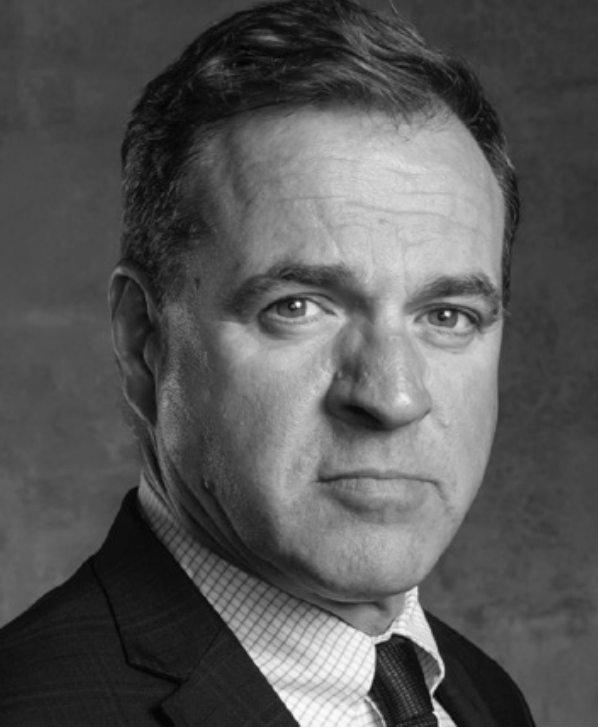
Central to any solution is a Christian educational renaissance. Reviving classical education would reconnect the people of the West with their spiritual and cultural heritage. Niall Ferguson is co-founder of a private liberal arts university in Texas, the University of Austin. It is a new example of the deep-rooted liberal arts tradition in America, now being revitalised at the school level by a flourishing of Christian classical institutions – such as the Chesterton Schools, one of which Sheridan visited for this book and reports on in detail.
This educational rebirth corresponds to a similar movement in Australia, reflected in the creation of Campion College at the university level and schools like Hartford College and the St John Henry Newman College.
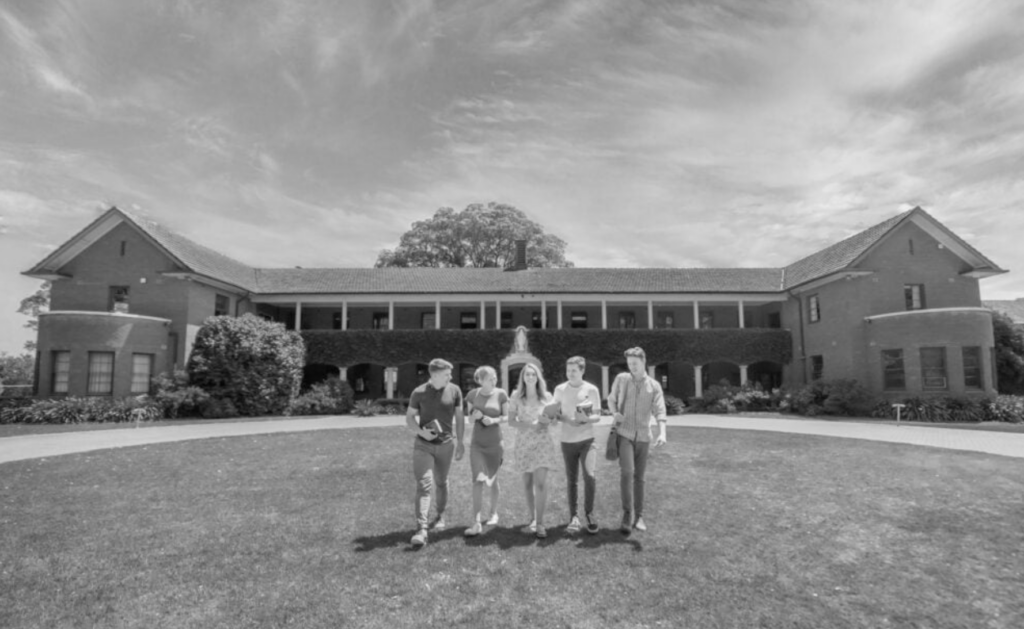
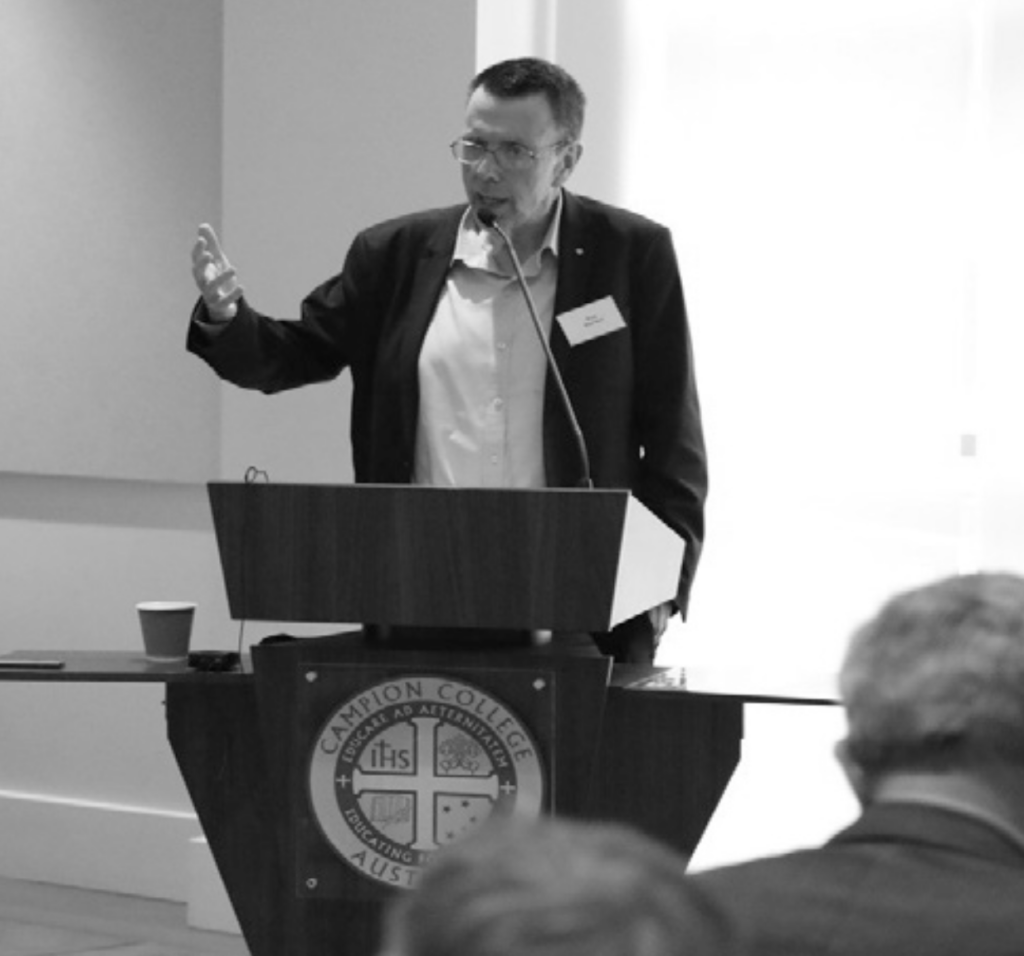
Australia’s first liberal arts college in Sydney – venue of the Australian Chesterton Conferences
Australia’s first liberal arts school for boys – in Sydney’s southeast
Catholic classical school recently opened in Brisbane
The diffuse and largely overlooked Christian revival in the West that has been highlighted by Sheridan accounts for his recent books becoming best sellers. God is Good for You sold over 30,000 copies, a remarkable figure for an
Australian book on Christianity – and one offering a positive perspective.
It is salutary that it should be a respected foreign affairs journalist who is shedding light on what has become most foreign to our culture, the world of transcendental meaning and religious faith, and that it is a general publisher, Allen & Unwin, which is alive to the untapped audience behind a quiet reawakening of Christian belief and life in the 21st century.