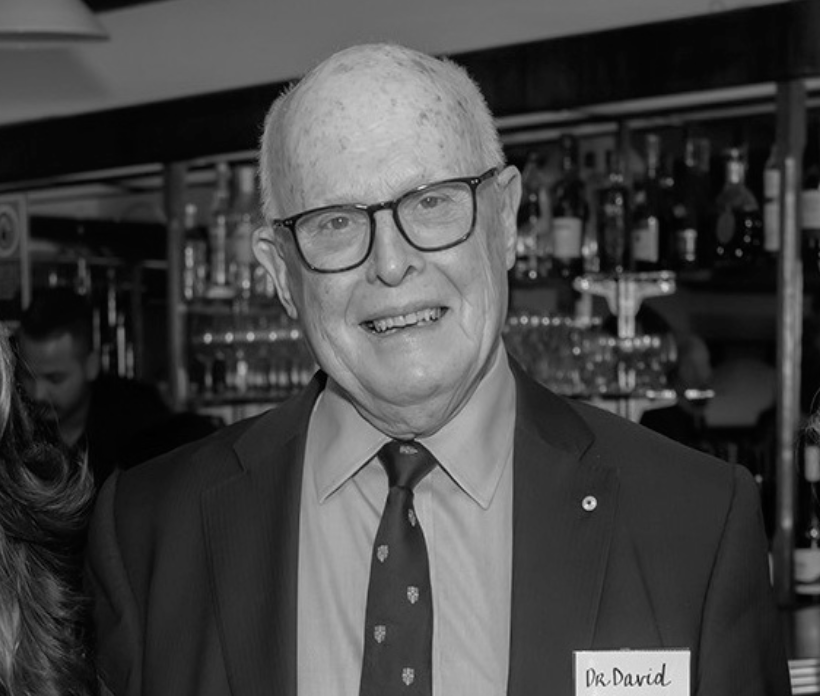
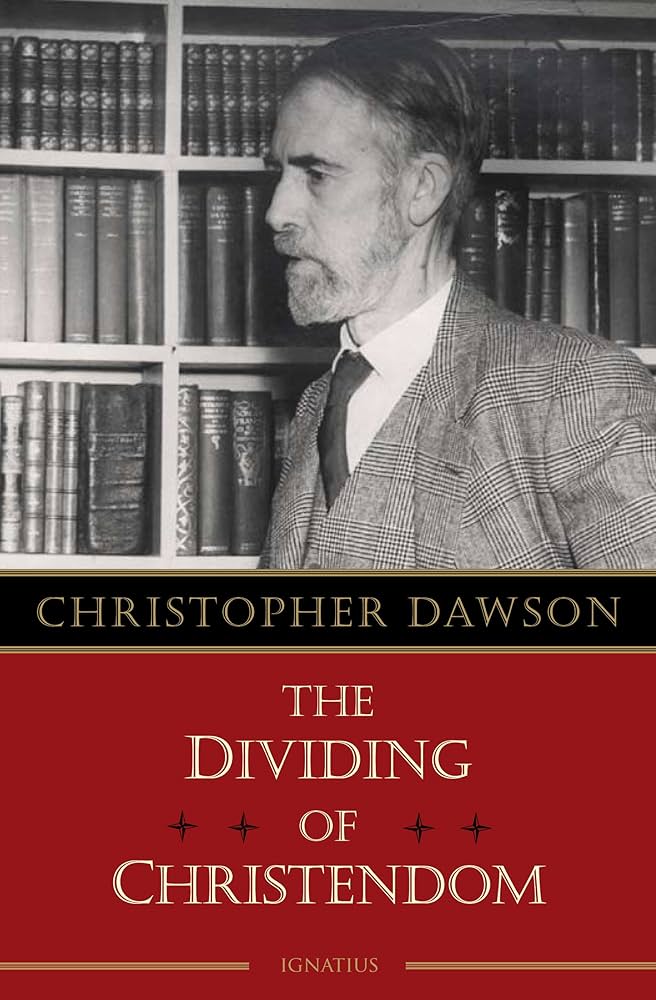
Dr David Daintree (pictured below) was the inaugural Director of the Christopher Dawson Centre for Cultural Studies, prior to which he served as President of Campion College in Sydney from 2008 to 2012.
“Years ago when I was an undergraduate your Ballad of the White Horse first brought the breath of life to this period for me when I was fed up with Stubbs and Oman and the rest of them. Unfortunately, the boredom that is generated in people’s minds by academic history leads to a positive anti-historicism which seems to be becoming characteristic of modern ‘left-wing’ thought.”
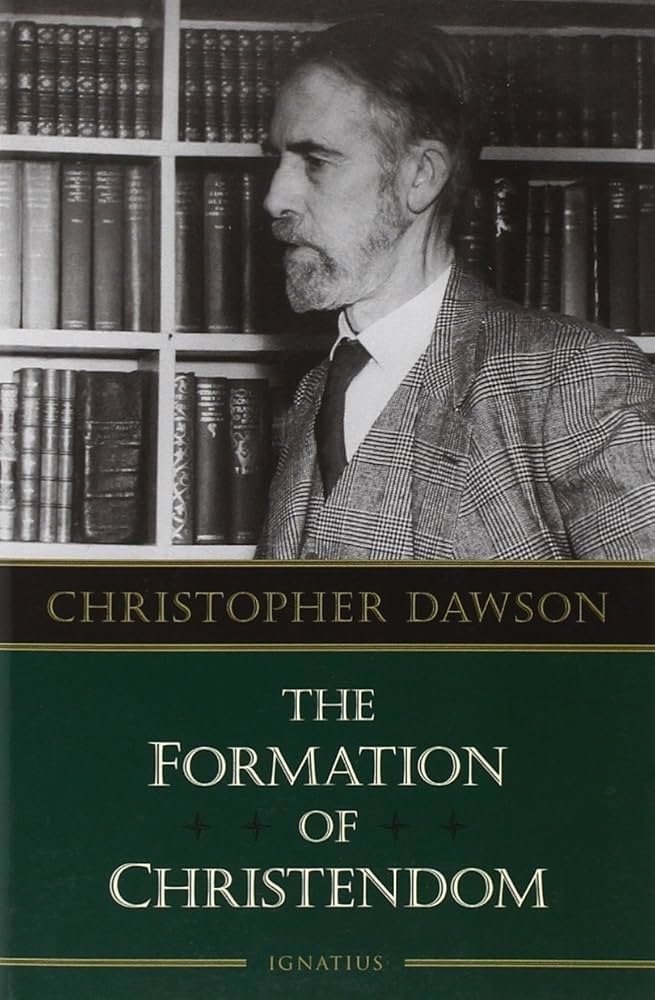
So wrote Christopher Dawson in a letter to Chesterton in 1932, the year in which his The Making of Europe was published. I’m not aware if they ever met face-to-face but there can be little doubt of their eventual good companionship in the
Communion of Saints.
Their minds and their priorities, however, were somewhat different. And why not? There are many flowers in God’s garden. For all his sympathetic understanding of the Middle Ages, Dawson was perhaps more ‘modern’ and forward-looking in his thinking. Living longer than Chesterton he also had the dubious privilege of understanding more directly the measureless horrors of which godless tyrannies such as Hitler’s and Stalin’s were capable.
Chesterton was also a man who thought deeply about the future, but had perhaps a more romantic and idealised view of the medieval past. These are just impressions of mine, but in any case they matter little: what united Chestertonand Dawson in mind and heart was their firm orthodoxy and total commitment to the Catholic Christian faith.
Advancing the Catholic Educational Tradition
In 2013 Bishop Julian Porteous was translated to Hobart to become its Archbishop, and he it was who asked me to establish a new organisation to, as he put it, ‘advance the good name of the Catholic Educational Tradition’. You have to give these things a name, and we thought for a while of ‘The Hobart Institute’ as a fairly bland and open-ended title, but His Grace very quickly came up with a better alternative: ‘would you do me a favour,’ he asked, ‘and name it after Christopher Dawson?’
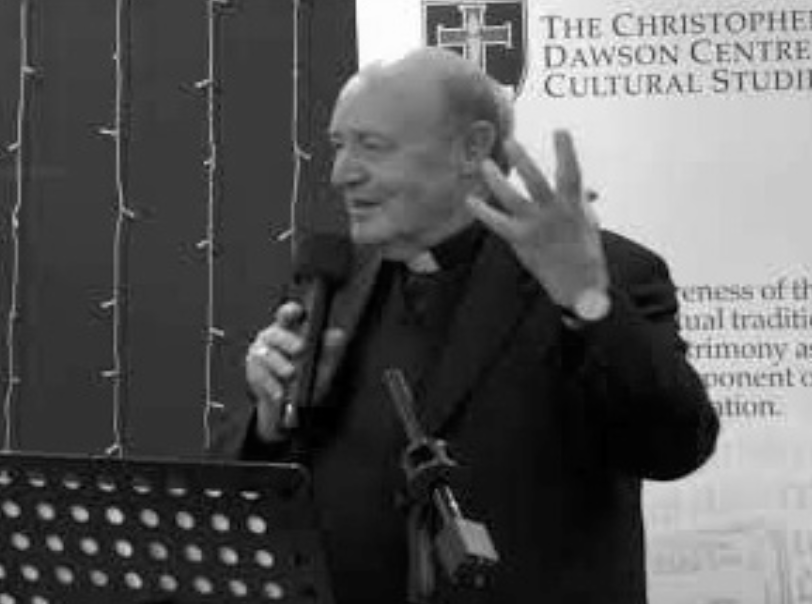
It was no great favour he was asking, for I had been imbued with Dawson’s thinking after my years at Campion and under the influence of my old friend Karl Schmude. Thus the Christopher Dawson Centre for Cultural Studies came into being.
Coincidentally on the other side of the country, in Perth, a small group of people established The Christopher Dawson Society. People assume that we were linked, but that was never the case. We both came into existence spontaneously, a circumstance that demonstrates the ongoing importance of Dawson to Catholics of a certain ilk, those who cling very strongly to, and are especially moved by, the notion that there is never a conflict between Faith and Reason, that the truths of Christianity are completely in accord with Science, and in fact that there would be no Science as we know it without the motivational power of Divinity.
So the Centre came into formal existence towards the end of 2013 – we didn’t let much grass grow under our feet – we were formally launched at a ceremony in State Parliament House by former Deputy Prime Minister the Hon Tim Fischer.
Thereafter our biggest event of the year was an annual conference – which we rather snottily preferred to call a colloquium – in July each year. We attracted speakers and participants from all over the country and even overseas, thoughtfully enabling them to enjoy all the glories of a Tasmanian winter.
Our focus was primarily on education: truth was our Hero, and phoney ideas our target. Numbers each year were modest – we would get 30 or 40 a time – until in 2024 we were fortunate enough to be banned by our usual venue for an indiscreet allusion in our promotional literature to ‘gender realignment’. This had the effect of more than doubling our registrations, a useful lesson perhaps to all who wonder about the wisdom of speaking up in a good cause.
I mentioned the Colloquium first, but we tried to meet a need in other areas as well. There was a fortnightly newsletter, often with guest articles from friends and supporters at home and overseas. We also hosted up to half a dozen talks by visiting specialists each year, often piggy-backing on visits to Australia by overseas speakers for whom a side-trip from Sydney or Melbourne was for us an affordable luxury.
To name all the distinguished speakers we managed to attract to Hobart for our colloquia and our guest lectures would be far too ambitious for this short paper; to name just a few might look like blatant name-dropping. But it’s perhaps not unreasonable to say that if a former deputy PM (Tim Fischer) launched us, a former PM (Tony Abbott) gave us a shot in the arm by being keynote speaker a few years later and – to show that we are not narrowly partisan – a member of PM Keating’s cabinet (Gary Johns) presented a fine paper at our first colloquium.
Apart from politicians we had the privilege of hosting such Vice-Chancellors as Rufus Black and Steven Schwartz, a high-ranking UN official (Ramesh Thakur), and a medical man who has battled hard for human life (David van Gend).
There were so many more of equivalent rank and importance; if any happen upon this article, I beg their forgiveness for not naming them. But the most controversial of all, if that can be measured by the ferocity of the opposition to him, was a mining engineer and climate scientist named Ian Plimer. As soon as his name was mentioned we were banned from three venues. You can guess what sin his was: he denies the official narrative on climate change. He is therefore, in the opinion of most modern trendsetters and ‘influencers’, a heretic of the most heinous kind. This tells us a lot about the mentality that now dominates human thinking. How Chesterton would have roared! In fact I think I can hear him now, among the music of the spheres, laughing at the folly of an age that excelled all others in placing mere creation above its Creator.
I retired last year, but the Dawson Centre is going from strength to strength under the leadership of its new Director, Alex Sidhu. Alex lives in Melbourne, so our focal centre has shifted from Tasmania to the mainland, from the periphery of the nation to a point much closer to its heart so that it now has much more
potential to become what we hoped it would be, a Catholic Think-Tank for
the whole Nation.
This paper was intended for the annual Chesterton Conference at Campion on 1st November last, but unhappily I fell off a ladder and broke my left humerus (no, not humorous – there was nothing funny about it) a few weeks before and there were further complications that prevented me from flying to Sydney. I had to ring Karl just a couple of days before to apologise. But I did promise to write on the proposed topic for The Defendant, and here it is.