Among the most remarkable applications of Chesterton’s ideas is the work of the Chesterton Centre in the west African state of Sierra Leone.

John Kanu, the Centre’s Founder and Director, recounts his discovery of Chesterton in Oxford, England, a quarter of a century ago, and his devoted efforts to apply, in the first instance, Chesterton’s Distributist ideas to the economy of his home village in Sierra Leone, and more recently, his opening of a Chesterton school to provide educational opportunities for the local community, and his establishment of a institute to develop practical skills for unemployed youths.
What started as a dream or better still, a bridge betweenbalance and folly in 1999 is beginning to bear fruits. G.K. Chesterton’s ‘distributist’ ideas are at work in Sierra Leone – one of Africa’s poorest countries.
In October 1999, I took a coach from London to Oxford, and soon met with a soft-spoken Englishman, who represented a life-changing turn of events.
The Englishman, providentially sent, was Stratford Caldecott (of blessed memory). He was the master of the Christianity and Society (C&S) class at Plater College, a Catholic residential college founded in 1921 in Oxford in memory of Fr. Charles Plater SJ.

Its purpose was to provide a second-chance educational opportunity for Catholic workers who, like me, had dropped-out of mainstream education because I had to find work to fend for my family. It was from Caldecott, through his soul-searching tutorials in the small office he occupied at Plater College, that I learnt about G.K. Chesterton and his ideas of Stratford Caldecott ‘Distributism’.
What was it that so fascinated me about Chesterton?
Although Chesterton never came to Africa, and I had never hard of him or his works until I met Caldecott in 1999, I was struck – and am still fascinated today – by his candour and the parallels of his writings and my experiences of community life in Kabonka, a typical small African village in Sierra Leone.
In other words, Chesterton in his distributist writings gave expression to the best qualities of traditional African communitarian values. Although I left with a Master’s degree in the social sciences from Oxford University, attending Stratford’s C&S classes was the best educational experience I got from Oxford! My providential encounter with Stratford Caldecott set off a litany of other encounters, some of which I will someday describe in another piece, such as my encounter with the “magnificent 4” (Aidan Mackey, Clark Durant, Dale Ahlquist and the ‘consummate’ Marco Sermarini).
Distributism holds that, politically and economically, the best kind of society is one characterized by widespread ownership of property […and I will add, in the case of our realities in Sierra Leone…the means of production and productive communal assets including relevant capacity].
The truth is: there is no way I could have returned back to Sierra Leone – a war devastated place – after three years living in Oxford with my family and a job offer if I had not discovered Chesterton’s distributism ideas. Through this encounter, I saw for the first time the fulfilment towards the dream and the commitment of my village folks, who as a child, had argued and debated whether or not to have me, one of their own ‘sent to school’. Today, three little initiatives are taking hold in Sierra Leone in honour and fulfilment of my discovery of G. K. Chesterton’s ideas.
Sierra Leone Chesterton Center (SLCC)
Founded in Oxford in 2002, and registered in Sierra Leone in 2006 as a community-based organization, the impact of the SLCC is mostly realized in Kono district, the epicentre of artisanal small-scale mining of diamonds and gold.
The SLCC initiative – working with smallholder farmer households (8 family members using rudimental tools to cultivate an average of 1.5 acres of rice fields per year) – has resulted in their being organised into cooperatives and enhancing the productive capacity of more than 2,000 smallholder farmers (80% of whom are women).
After 15 years involvement in this work, we now have irrefutable evidence that the cooperative approach is an effective ‘distributist’ model.
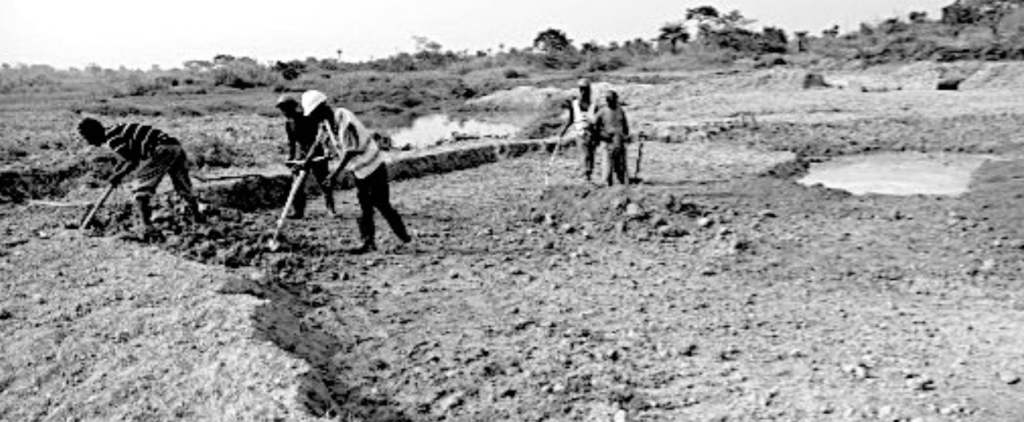
Through this model, families living in mining-affected communities have cooperated with each other to convert, reclaim and own lands degraded and previously lost to decades of mineral exploitation.
Today in two communities, for example, a total of 10 acres (40,470 sq. metres) of such lands were converted into productive communal agricultural assets and fishponds, from which each family is now better able to feed itself, and one child per family has been sent to the village school. Tuition fees are paid from the proceeds and sales of agricultural products as the outcome of their combined labour.
SLCC’s focus to protect land is not misplaced because land, in traditional African values, is not just a place to grow crops for food, but also a resource with aesthetic, cultural, social and spiritual values.
To start with, land does not belong to one person but must be accessible to all the members of a family or clan. It is a resource to be tendered with care and honest stewardship and to be passed on from one generation to the other. Land in Africa symbolizes the connection between the past, the present and the future. It is on this same land that our ancestors had toiled, took responsibility for their community and offspring – and therefore, the next generation should be desirous to do the same.
Chesterton Academy of Sierra Leone (CASL)
Founded in 2021 with only 14 pupils, the school has become a beacon of hope and a resource for the community to mitigate the age-old problem of poor education. Now providing for over 500 pupils today, the CASL is among the top schools, using quality and Catholic practical educational pedagogy in Science and Technology, a discipline Chesterton described as “Scientia Est Aut Instrumentum Aut Ludus’’ (science is either a tool or a toy).
From this school, we hope to scale up to a Chesterton University where a future generation of artisans, auto-engineers, computer specialists, agriculturists, business entrepreneurs and critical trade-leaders would be trained to address the extensive social and economic challenges facing their local communities – with compassion and with Chesterton’s candour and laughter.
Chesterton Vocational and Skills Development Institute (CVSDI)
With dogged determination, and the counsel of Archbishop Edward Tamba Charles of the Catholic Archdiocese of Freetown, Sierra Leone, the idea of establishing a special training institute, the CVSDI, to cater for youth 18 years and above, took on practical possibility in 2022.
Like the cooperative farmer model implemented in rural Kono, in the eastern province of Sierra Leone, the CVSDI is focused on building capacity along relevant and employable skills for youth who dropped out of formal education or else missed the chance to go to school. Without this support, they would never fully participate in the dynamics of their local economies.
In sum, the Institute is in tandem with distributist objectives. The basic reason is that equipping these youth with skills is what would make a difference for unemployed youths in Sierra Leone. So many are susceptible to drugs and other forms of abuse, or they face the likelihood of becoming fodder for dangerous internal and external migration.
The CVSDI is an attempt to rediscover and enhance ‘middle-man-power skills’. These have been neglected in modern education in Sierra Leone, despite the importance of such skills in job creation and the local economy.
The CVSDI was officially opened and dedicated to God on 7th October 2025 by Archbishop Edward Tamba Charles. Unlike extant development models, the blend of trainings conducted in this vocational institute are based on the outcomes of stakeholder consultations and a structured socio-economic study conducted in the western rural area of Sierra Leone, which showed a strong demand for these areas of skills development.
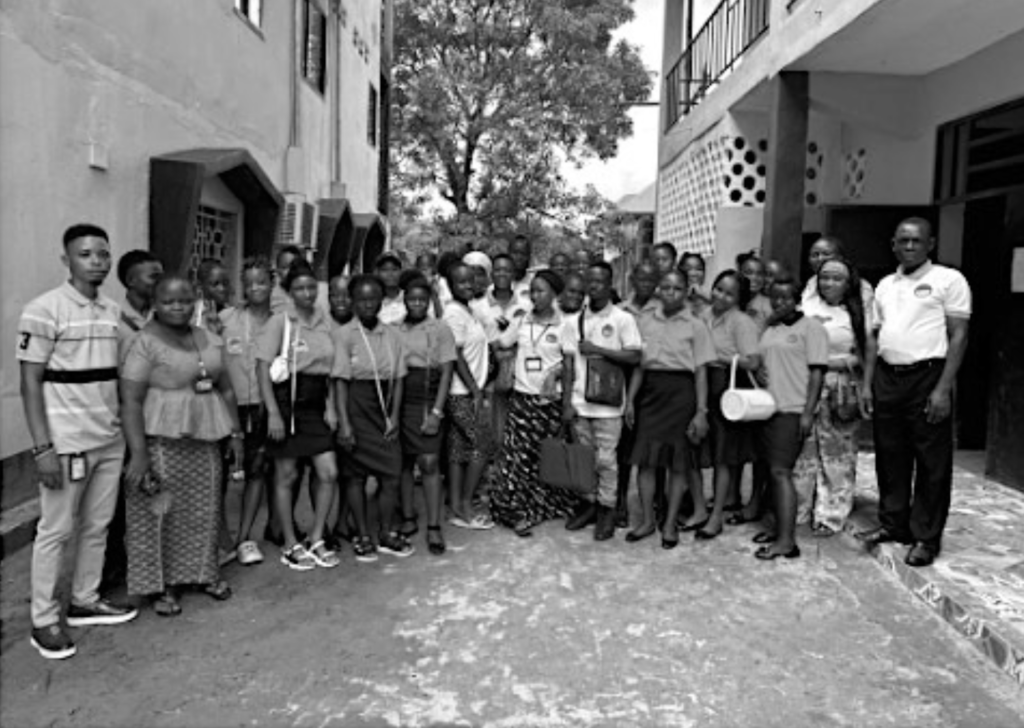
A total of 54 youth (86% women) is currently registered, and at various levels, pursuing training in Catering/Culinary and Hospitality skills, Tailoring and Fashion Design, Hair Dressing & Cosmetology, Information & Communication Technology; Electrification and Solar Power Installation, all of which will mitigate the prevailing challenges of high youth unemployment and poverty in the district.
Upon completion of an 18-month training cycle in any of the above skill sets, successful candidates will be awarded proficient certificates by Sierra Leone’s National Commission of Technical Education, and then organized into small-scale enterprise cooperatives, accompanied with financial and technical inputs, to ensure success and sustainability.
All these will be impossible without your prayers, and we look forward to working with any of you in Australia as partners, through the agency of G.K. Chesterton for the glory of God.
You are also encouraged to visit our Sierra Leone Chesterton website.
For further details or comments, please contact John Kanu through the website.